Healthy Habits in Japan: How Living in Japan Changed the Way I Eat, Move, and Think About Health
I don't know how many times I've read comments from people or seen social media content saying that 'living in Japan is healthier' or 'you'll lose weight by living in Japan'. You'll hear stories of visitors losing weight from walking everywhere, eating smaller portions, and enjoying fresh, seasonal food. While there's certainly some truth to that, I quickly learned that simply moving to Japan doesn't automatically make you healthier.
After moving to Japan, I found myself falling into many of the same habits I had back home. I was eating too much during the excitement of settling into a new country, relying on convenience store meals more often than I should have, and figuring out how to cook healthy meals in a tiny apartment kitchen with no oven. It wasn't until I started making small, intentional changes that I noticed a real difference in my health and overall quality of life.
Over the years, living in Japan has completely changed the way I think about food, movement, and my relationship with health. Some habits came naturally, while others took years of trial and error to develop. None of them were about chasing perfection or trying to become "Japanese-sized." They were about building a healthier lifestyle that worked for me as a plus size woman living in Japan.
Looking back, I don't think there was one big moment that changed everything. It was dozens of small habits that slowly became part of my everyday life. Some of them were things I learned from living in Japan, while others came from adapting my old routines to fit my new home. Those small changes have added up in ways that have improved both my mental and physical health and my overall quality of life.
Contents
Healthy in Japan: Food Habits
Healthy in Japan: Daily Exercise and Movement
Healthy in Japan: Mental Health & Mindset
One of the Biggest Mistakes I Made After Moving to Japan
If it's your first time moving abroad, it's surprisingly easy to fall into this pattern, no matter which country you move to.
When you first arrive, everything feels exciting. You want to explore every neighbourhood, visit every tourist spot, and try every food you've been reading about for years. Without even realizing it, you slip into "vacation mode."
When we're on holiday, most of us naturally eat more than we normally would. We know we only have a limited amount of time, so we don't want to miss out on any experiences. That often means saying yes to every dessert, every street food stall, and every restaurant that catches our eye.
The problem is that when you move to Japan, you're not actually on vacation.
You might be here for months, years, or even the rest of your life. There will be plenty of time to try every ramen shop, every seasonal dessert, and every convenience store snack. You don't have to do it all in your first few months.
I spent far longer in that honeymoon phase than I should have. I wanted to try absolutely everything I saw. My normal routines disappeared, and I was eating far more than I usually would because every meal felt like a new experience.
It took a while for my brain to catch up with reality. Japan wasn't a holiday, it was home. Calories still counted here just as much as they did back home.
That's not to say you shouldn't enjoy yourself. Trying new foods is one of the best parts of living in Japan. I just learned that I didn't have to eat everything right away. Spacing those experiences out made them even more enjoyable, and it helped me build habits that I could actually maintain.
My tip: Try to cook at home most days, especially during your first few months. Save restaurant meals, desserts, and limited-edition treats for occasions when you genuinely want them, rather than feeling like you have to try everything before it's gone. Focus on building balanced meals with plenty of vegetables, fibre, and protein, and remember that Japan isn't going anywhere.

Your Kitchen Might Look Very Different
One thing I completely underestimated before moving to Japan was how different my kitchen would be.
In a typical Japanese apartment, you'll usually have space for a two-burner gas stove with a small fish grill drawer, a small fridge, and very limited counter space. Unless you're moving into a furnished apartment (which is relatively uncommon outside of certain agencies or short-term rentals), your kitchen will likely be almost completely empty when you move in. You'll need to buy everything yourself after you arrive.
It's no surprise that many people spend their first few weeks living off convenience store meals and supermarket bentos while they get everything set up.
For me, the biggest adjustment wasn't the size of the kitchen. It was losing my oven.
Back home, almost all of my favourite healthy recipes were oven-based. I loved roasting vegetables, baking chicken, and making easy sheet-pan dinners. When I moved to Japan, I suddenly realized I didn't actually know many healthy meals that could be made entirely on the stovetop, apart from stir-fries, soups, and stews.
Over time, I learned new techniques. I figured out how to cook juicy chicken breasts in a frying pan instead of drying them out, experimented with steaming vegetables, and gradually built a collection of recipes that actually suited my kitchen instead of trying to recreate the one I'd left behind.
About five years after moving here, I finally invested in a good-quality countertop microwave and oven combination.
It wasn't cheap, but for me it was absolutely worth it. Sheet-pan meals are one of my favourite low-effort dinners. I can chop some vegetables, add a chicken breast, drizzle everything with a little olive oil, and let it cook while I unwind after work. It's one of those purchases that genuinely improved my day-to-day life.
My tip: Before you move, research what’s available at Japanese grocery stores and learn a few healthy stovetop meals that you'll genuinely enjoy cooking. If you know you'll be staying in Japan for several years and love cooking with an oven, a countertop oven can also be a worthwhile investment. It's definitely not essential, but for me, it's been one of the best quality-of-life upgrades I've made.
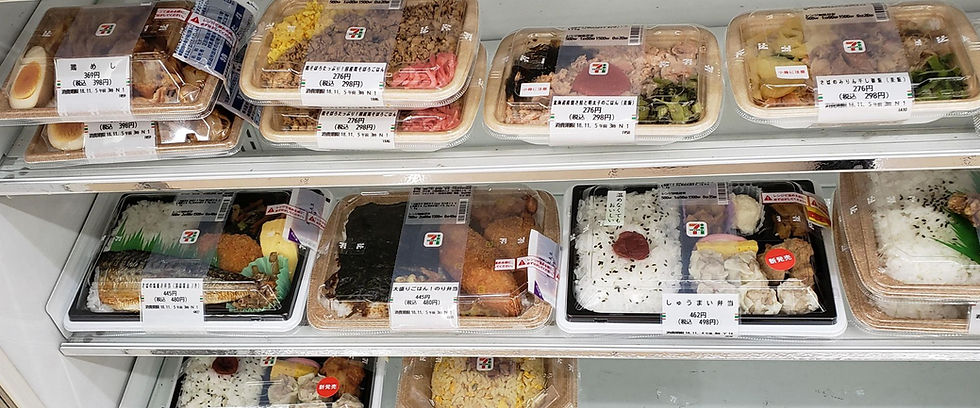
Convenience Stores Are Great... But Don't Rely on Them Every Day
One of the best things about living in Japan is how easy it is to find a quick meal. Whether you're finishing work late, coming home after class, or just don't have the energy to cook, your local convenience store is always there.
And honestly, there's nothing wrong with that.
I still grab convenience store meals from time to time. They're affordable, convenient, and often much better than what you'd find in convenience stores back home.
The problem comes when they become your everyday diet.
While many pre-made bentos, pasta dishes, and rice bowls are delicious, they're often high in refined carbohydrates and sodium while being relatively low in vegetables, fibre, and sometimes protein. If you're eating them for most of your meals, it can be harder to get the variety of nutrients your body needs.
One thing that helped me was thinking of convenience store meals as a starting point rather than a complete meal.
My tip: If you're already picking up a bento or ready-made meal, grab a bag of salad or some cut vegetables as well. Adding extra vegetables is an easy way to increase your fibre intake and make the meal feel more balanced. When choosing a main dish, I also try to look for options with grilled chicken, grilled fish, eggs, or other protein-rich ingredients, and save the fried meals for when I'm really craving them.

Get to Know Japanese Produce & Seasonal Offerings
One of my favourite parts of grocery shopping in Japan is discovering new fruits and vegetables, and just enjoying how fresh and delicious local produce is.
When you first arrive, the produce section can feel a little overwhelming. You'll probably recognize plenty of familiar ingredients, but you'll also come across vegetables you've never cooked before. Instead of sticking to the same meals you made back home, I really encourage you to embrace the opportunity to try something new.
Japan has a strong culture of eating seasonally, and you'll notice supermarkets change throughout the year. Sweet corn appears in summer, asparagus becomes much more affordable in spring, and winter brings an abundance of citrus fruits. Shopping with the seasons not only adds variety to your meals, but often means you're buying produce when it's at its freshest and most affordable.
Of course, you'll still find many familiar staples year-round, including potatoes, carrots, onions, cabbage, lettuce, mushrooms, bananas, apples, and tomatoes, alongside Japanese favourites like negi (long green onions), kabocha squash, and a huge variety of mushrooms.
One of the things I've really come to appreciate is how fresh local produce can be. Even simple vegetables seem to taste better when they're in season.
My tip: If you have one nearby, check out your local vegetable shop or co-op supermarket instead of relying solely on the big chain supermarkets. They often stock locally grown produce, seasonal specialties, and competitive prices.
I'm also a big fan of buying "ugly vegetables." Some shops sell imperfect produce that doesn't meet the cosmetic standards for regular display. Think wonky carrots, oddly shaped potatoes, or misshapen cucumbers. They're just as fresh and delicious as the perfect-looking ones, but they're often sold at a discount. It's a great way to save money while reducing food waste.
Choose Lean, Affordable Proteins
One thing I quickly learned after moving to Japan was that not all proteins are priced equally.
Chicken breast has become my go-to. It's one of the most affordable lean meats you'll find year-round, it's incredibly versatile, and it works in everything from salads and stir-fries to curries and pasta. I even use ground chicken breast instead of beef in many recipes.
Pork is another affordable staple in Japan, while beef and lamb tend to be much more expensive. If you're shopping on a budget, you'll probably notice that the cheapest beef is usually very thinly sliced and heavily marbled with fat. It's perfect for dishes like gyudon or sukiyaki and absolutely delicious, but it's something I personally treat as an occasional meal rather than an everyday protein because of its higher fat content.
Fish is another fantastic option. Prices vary depending on the season and the type of fish, but Japan has an incredible selection, and it's often one of the healthiest proteins you can add to your meals.
Don't overlook eggs and tofu either. They're inexpensive, widely available, and easy ways to add protein to your diet without spending a fortune.
Just like fruit and vegetables, many seafood varieties and some meats are seasonal in Japan. As you become more familiar with your local supermarket, you'll start to notice what's plentiful throughout the year, and shopping with the seasons can often save you money while adding more variety to your meals.
My tip: Rather than buying the same protein every week, let the supermarket guide you. If chicken is on sale this week, stock up. If seasonal fish is affordable, give it a try. Building your meals around what's fresh and reasonably priced is one of the easiest ways to eat well without blowing your grocery budget.

Rethink How You Meal Prep
Unless you're living in a share house, with a host family, or in a larger apartment, you're probably going to have a fairly small fridge and freezer. That alone changes the way you shop.
I also found that many fresh fruits and vegetables didn't last as long as I was used to back home. Leaving certain produce in the fridge for even a week was sometimes enough for it to spoil. It's also worth checking your produce carefully before you buy it. Because supermarkets often sell very fresh, seasonal produce, it's not unusual to occasionally spot an item that's started to go bad before staff have removed it. I always give fruit and vegetables a quick once-over for any signs of mould or damage before adding them to my basket.
For me, buying groceries for two weeks at a time just wasn't realistic.
I'm a lazy meal prepper, but a dedicated portion prepper.
As a one- or two-person household, buying everything in bulk usually meant one of two things: either I was eating the same meals for days on end, or I ended up throwing food away.
What finally worked for me was prepping ingredients instead of complete meals.
Every couple of weeks, I'd buy meat in bulk, then spend an hour or two dividing it into meal-sized portions using a kitchen scale and freezer bags. I'd label each bag with the weight and freeze everything.
A little tip: I don't use one bag for every portion. Instead, I leave a small gap between each portion inside a larger freezer bag. Once they're frozen, I can usually snap off exactly what I need without having dozens of individual bags cluttering up my freezer.
The night before work, I'd move one portion from the freezer into the fridge. By the time I got home the next evening, it was thawed and ready to cook.
Vegetables were a different story.
Yes, buying the largest bag is often cheaper, but I eventually accepted that I couldn't realistically eat an entire family-sized bag of vegetables before they spoiled. These days, I'm happy to spend a little more on smaller quantities. In the end, it's actually cheaper than buying bulk produce and throwing half of it away.
Like I mentioned earlier, I'm a lazy cook after work. The last thing I want is a recipe that takes an hour to prepare.
Most nights, dinner is simply a protein with a salad, roasted vegetables, or pan-fried vegetables. Since my protein is already thawing while I'm at work, all I need to decide is which vegetables I feel like eating. If I need something fresh, I'll stop by the supermarket on my way home, then dinner is on the table with very little effort.
My tip: Don't feel like you have to become the kind of person who meal preps 14 identical lunches every Sunday. Sometimes prepping your ingredients is enough. Having your protein portioned and ready to cook can make healthy dinners feel much more achievable after a long day.
Figuring Out My Relationship With White Rice
Rice is at the heart of so many Japanese meals, so naturally I expected it to become a much bigger part of my diet after moving here.
The problem was... my digestive system had other ideas.
When I dramatically increased how much white rice I was eating, I noticed I didn't feel my best. I felt bloated, my fibre intake had dropped without me really noticing, and my digestion definitely wasn't as regular as it had been before.
I've also heard similar stories from travellers who arrive in Japan and suddenly find themselves constipated after a few days. For many people, it's simply a combination of travelling, changes in routine, dehydration, and eating more refined carbohydrates while eating fewer fruits and vegetables than they normally would.
That doesn't mean white rice is unhealthy or something you should avoid.
For many people, it's a perfectly nutritious staple and they feel great eating it every day.
It just wasn't the best fit for my body.
When I first started working with my nutritionist, she was a little surprised by my hesitation around rice because it's such a normal part of the Japanese diet. Her first meal plans included it almost every day, but after talking through my experiences, we adjusted things to better suit me.
I realised I simply feel better when more of my daily carbohydrates come from vegetables, fruit, and other higher-fibre foods. I still enjoy rice, just not at every meal.
Now, when I do eat it, I'm much more conscious of portion sizes and I make sure the rest of my meal includes plenty of vegetables and a good source of protein. That combination works much better for me.
My tip: Don't feel like you have to eat exactly like everyone around you just because you've moved to Japan. Experiment, pay attention to how different foods make you feel, and build a way of eating that works for your body. Healthy eating isn't about copying someone else's diet. It's about finding habits you can maintain while feeling your best.

Walking Is Part of Everyday Life (And So Are the Stairs)
One thing that didn't change much when I moved to Japan was how much I walked.
I don't drive, and I grew up in a city with decent public transport and walkable neighbourhoods. Walking 15 or 20 minutes to the supermarket, carrying groceries home, or making the half-hour walk to work instead of waiting for a bus was completely normal for me.
Japan felt very familiar in that respect.
A lot of your daily movement happens naturally. You'll walk to the station, through the station, to the supermarket, around shopping centres, and while exploring your neighbourhood. You might not think of it as exercise, but those steps add up.
What I wasn't prepared for was the stairs.
So. Many. Stairs.
Japanese cities are incredibly vertical. You're constantly going up flights of stairs in office buildings, shopping centres, train stations, and restaurants, or heading down into subway stations. Yes, you can often find an escalator or lift, but it usually means walking further to get there, assuming there is one at all.
For me, the stairs became impossible to ignore.
Over the years, my knees had started hurting more and more, and climbing stairs became something I genuinely dreaded. Living in Japan meant I couldn't simply avoid them. They were part of my daily routine.
That was one of the biggest catalysts for improving my health.
I couldn't change Japan's infrastructure, but I could change what my body was capable of.
So I did.
Little by little, things became easier. My knees hurt less. I wasn't stopping halfway up a flight of stairs to catch my breath. Today, I can climb several flights without feeling like I'm about to pass out.
Whenever people ask me about my health journey, that's honestly one of the things I'm most proud of.
Not a number on a scale.
Not a clothing size.
The fact that I can take the stairs without anxiety.
If you've never struggled with stairs, it's hard to explain how freeing that feels. Not having to hide your heavy breathing, worry about holding people up behind you, or automatically look for the nearest lift every time you enter a building.
For me, being able to take the stairs comfortably is one of the clearest reminders of how far I've come.
My tip: Don't underestimate everyday movement. You don't need to hit 20,000 steps every day or spend hours in the gym to see progress. Walking to the station, taking the stairs when you can, and simply getting out to explore your neighbourhood all add up over time.
Finding Ways to Exercise at Home
If you're already in the habit of going to the gym or regularly use equipment like heavy weights, a gym membership in Japan may be worth the investment. They're not the cheapest, but if you'll use it consistently, it can be money well spent.
Personally, I've never been much of a gym person.
I'm also not someone who's heading out for a run every morning. Instead, I've gradually built a simple home workout setup that fits both my lifestyle and my apartment.
Nothing fancy, just a stationary bike, a pair of dumbbells, and a yoga mat for stretching and strength exercises.
Having the equipment at home removes one of my biggest barriers to exercising. Even if I only have 20 or 30 minutes after work, it's much easier to convince myself to do a quick workout than it is to travel somewhere.
The biggest adjustment was learning to be mindful of the people living around me.
Japanese apartments often have thinner walls and floors than I was used to, and being a good neighbour means thinking about the noise you make. Activities that involve jumping, stomping, or dropping weights can easily travel through the building.
My tip: If you exercise at home, invest in thick foam exercise mats. I keep them under my stationary bike and anywhere I use my dumbbells to help absorb noise and vibration. I also avoid high-impact workouts like jumping jacks or step aerobics. My neighbours probably appreciate it just as much as I do!
Looking After Your Physical and Mental Health
One of the biggest improvements to my overall health had nothing to do with food or exercise.
It was actually going to the doctor.
If you're living in Japan, you'll be enrolled in the national health insurance system, so don't be afraid to use it. You're already paying for it, and taking care of your health is one of the best investments you can make.
One thing that surprised me after moving to Japan was how much more willing I became to seek medical care. In my home country, doctor visits were free, but waiting months, or even years, to see a specialist was fairly common. In Japan, my experience was very different. Even after factoring in the out-of-pocket cost of appointments, I was usually able to see specialists within weeks rather than months. That access made a huge difference.
Not long after moving to Japan, I discovered I had both high cholesterol and gout, neither of which I knew about before. I'd actually convinced myself that the severe pain in my joints was arthritis, but after seeing a specialist, it turned out to be gout instead. Once I started the appropriate treatment, my symptoms improved dramatically. Access to healthcare also made another life-changing decision possible. Thanks to Japan's healthcare system, I was able to have gastric sleeve surgery, with the procedure covered by my health insurance. That opportunity simply didn't exist for me in my home country. While surgery wasn't a magic solution, it became another important tool that helped me improve my health alongside the habits I've talked about here. If you'd like to read more about that experience, I've shared the full story in my article about getting gastric sleeve surgery in Japan.
The same was true for my mental health.
Although Japan doesn't always have the best reputation internationally when it comes to mental health, I found that psychiatric care and medication were much more accessible than I'd expected. Talk therapy can still be expensive, but psychiatric appointments and prescription medications are generally affordable through the national health insurance system. There are also additional government support programs that can reduce costs further for people living with certain long-term mental health conditions.
Getting the right diagnoses and receiving treatment for both my physical and mental health didn't magically solve every problem I had. What it did do was remove obstacles that had been making healthy habits much harder to maintain.
Once I had the right support, eating well, exercising, sleeping better, and taking care of myself all started to feel much more achievable.
My tip: Don't ignore health concerns just because you've moved to a new country. Whether it's persistent joint pain, digestive issues, anxiety, depression, or something that simply doesn't feel right, make an appointment and get it checked. Sometimes improving your health starts with asking for help.
Rethinking Fullness & Your Relationship with Food
One of the biggest lessons I've learned while living in Japan had nothing to do with specific foods. It was about my relationship with food itself.
I still remember seeing what some of my Japanese friends would eat in a typical day and being genuinely surprised by the portion sizes. They looked tiny to me.
I couldn't understand how anyone could possibly feel satisfied eating so little!
Looking back, I realize the problem wasn't their portions. It was my idea of what a "normal" portion looked like. I'd grown up eating restaurant meals that were often far larger than one person actually needed. Over time, I'd stopped paying attention to my body's hunger signals and instead relied on my eyes. If there was food on the plate, I'd usually finish it. If I wasn't completely full, I'd often assume I needed more.
Those habits don't disappear overnight. In fact, I'm still working on them.
One of the reasons I started seeing a nutritionist was because I realized that although I'd spent years learning about calories, nutrients and diets, I didn't really know how to nourish my body. I wasn't very good at recognizing genuine hunger or knowing when I'd had enough.
Another thing I've had to unpack is the way I think about value.
Growing up, money was tight, so I naturally learned to look for the biggest portion for the lowest price. There was absolutely nothing wrong with that. When you're trying to stretch your grocery budget, you make the choices you need to make.
But I carried that mindset into adulthood, to an extreme.
I often found myself choosing larger portions of less nutritious food over smaller portions of meals that would actually fuel my body better. My question was always, "What's going to make me feel the fullest?" when a healthier question would have been, "What does my body actually need right now?"
That shift in thinking is still a work in progress.
Living in Japan didn't magically change my relationship with food. What it did do was encourage me to slow down and pay more attention to how I was eating. Over time, I've become much better at recognizing when I'm comfortably satisfied instead of aiming to feel completely stuffed after every meal.
It's not about dieting, banning certain foods, or depriving yourself of things you enjoy. For me, it's been about rebuilding trust with my body, learning to recognise hunger and fullness, and creating healthier habits that I can actually maintain for the rest of my life.
Be Kind to Yourself
Give yourself permission to adjust.
Moving to another country is exciting, but it's also exhausting. You're learning a new language, navigating unfamiliar supermarkets, figuring out public transport, building a new routine, and trying to make a life for yourself. That's a lot for anyone.
It's easy to look around and feel like everyone else has it all figured out while you're still standing in the vegetable aisle with Google Lens open, trying to work out what you're looking at.
We've all been there.
You'll gradually learn which supermarket has the best prices, which vegetables you enjoy cooking, where to buy your favourite ingredients, and which healthy meals fit your lifestyle. None of that happens overnight.
You also don't need to put pressure on yourself to become a completely different person just because you've moved to Japan. People often talk about Japan as if simply living here will make you healthier. They'll tell you they lost weight because they walked everywhere on holiday, and for some people that absolutely happens.
But living somewhere is very different from visiting.
When you actually live here, life settles into a routine. You wake up, go to work or school, run errands, and head home. Most weekdays aren't filled with sightseeing and 30,000-step adventures. They're filled with ordinary responsibilities, just like they were back home.
Some evenings I make time for a workout. Other evenings I collapse onto the sofa for some mindless doomscrolling after a long day because that's all I have the energy for.
Both are part of real life.
Living in Japan doesn't automatically make you healthier. What it does give you is the opportunity to build healthier habits over time. Those habits don't have to be perfect, and they certainly don't have to happen all at once.
For me, that's been the biggest lesson of all. Health isn't something that happened because I moved to Japan. It happened because, over the years, I slowly adapted to a new environment, questioned some of my old habits, and found routines that genuinely worked for me.
Moving to a new country gives you the chance to build new routines and leave old habits behind, but it doesn't magically change you overnight. Creating healthier habits still takes the same conscious effort it would have back home. At some point, you have to decide what you want to change, then take small, realistic steps towards making it happen.
For me, this journey wasn't just about losing weight or eventually fitting into more Japanese clothing, even though those were certainly motivations along the way. It was about building habits that I could actually maintain for the long term. Habits that gave me more energy, improved my mobility, helped me feel better physically and mentally, and ultimately made everyday life in Japan more enjoyable.


Comments